


The Hands Behind the Soul
Where human mastery meets the art of time
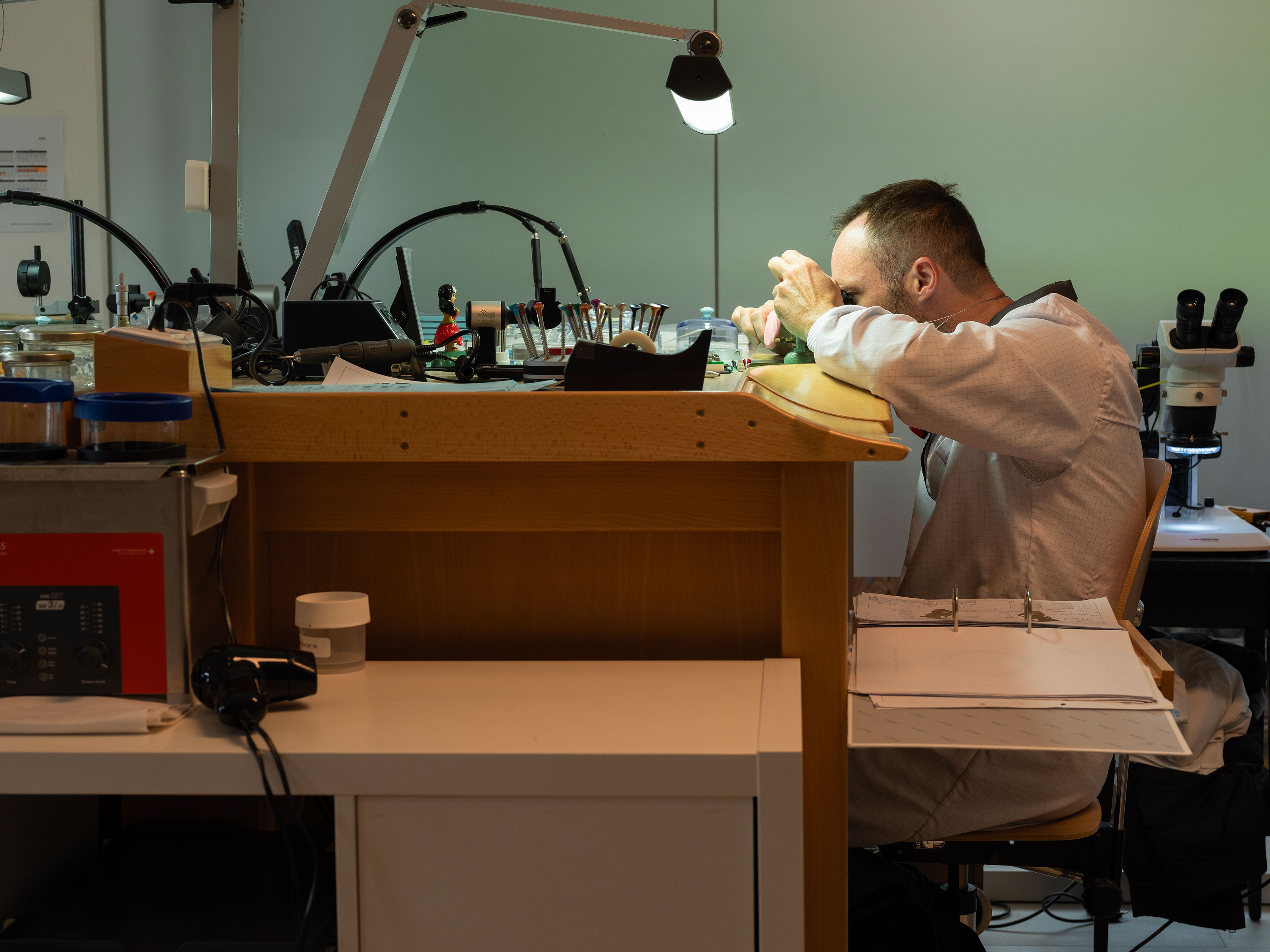
There is a moment, in every grand complication, when weeks of silence become sound. When a spring finds its tension, when a wheel begins to turn, when something that existed only in drawings and patience suddenly becomes alive.
At the Cercle des Horlogers, we have always believed that a timepiece is only as extraordinary as the person who makes it. Not the machine. Not the process. The person. The one who spends hours under a microscope learning how invisible forces speak to one another. The one who passes that knowledge on before it disappears forever. The one who understands, deeply, that what lands on a wrist is not just a mechanism it is a piece of a human life, compressed into something extraordinary.
These are our artisans. This is their story.
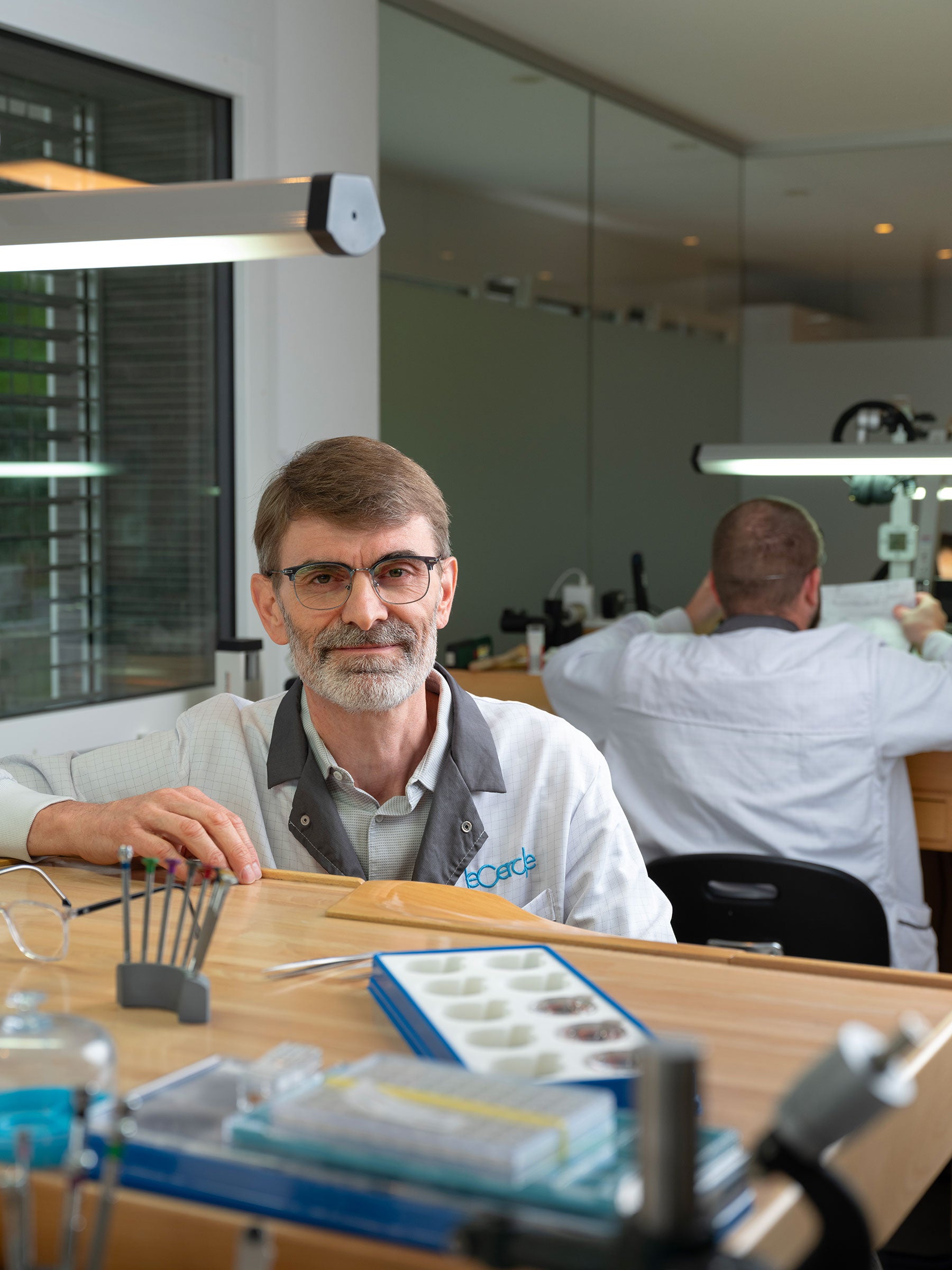
Nicolas Larcher - Head of Production, Grand Complications
THE SOUL OF COMPLICATIONS
With quiet pride and absolute commitment, Nicolas Larcher has spent two decades at the heart of the most demanding craft in watchmaking. He did not come here by the obvious path. He came by the right one.
After ten years in industrial sales, he walked away from everything he knew, drawn not by ambition, but by a need he could not name yet: to work with his hands, to feel the weight of something real. A one-year retraining course later, he was assembling tourbillons. He never looked back.
His first grand complication changed something in him permanently. The absolute precision it demanded. The silence of the bench. And then, the moment of winding the crown and watching it breathe for the very first time. He still reaches for the same words to describe it: mechanical and poetic, all at once.
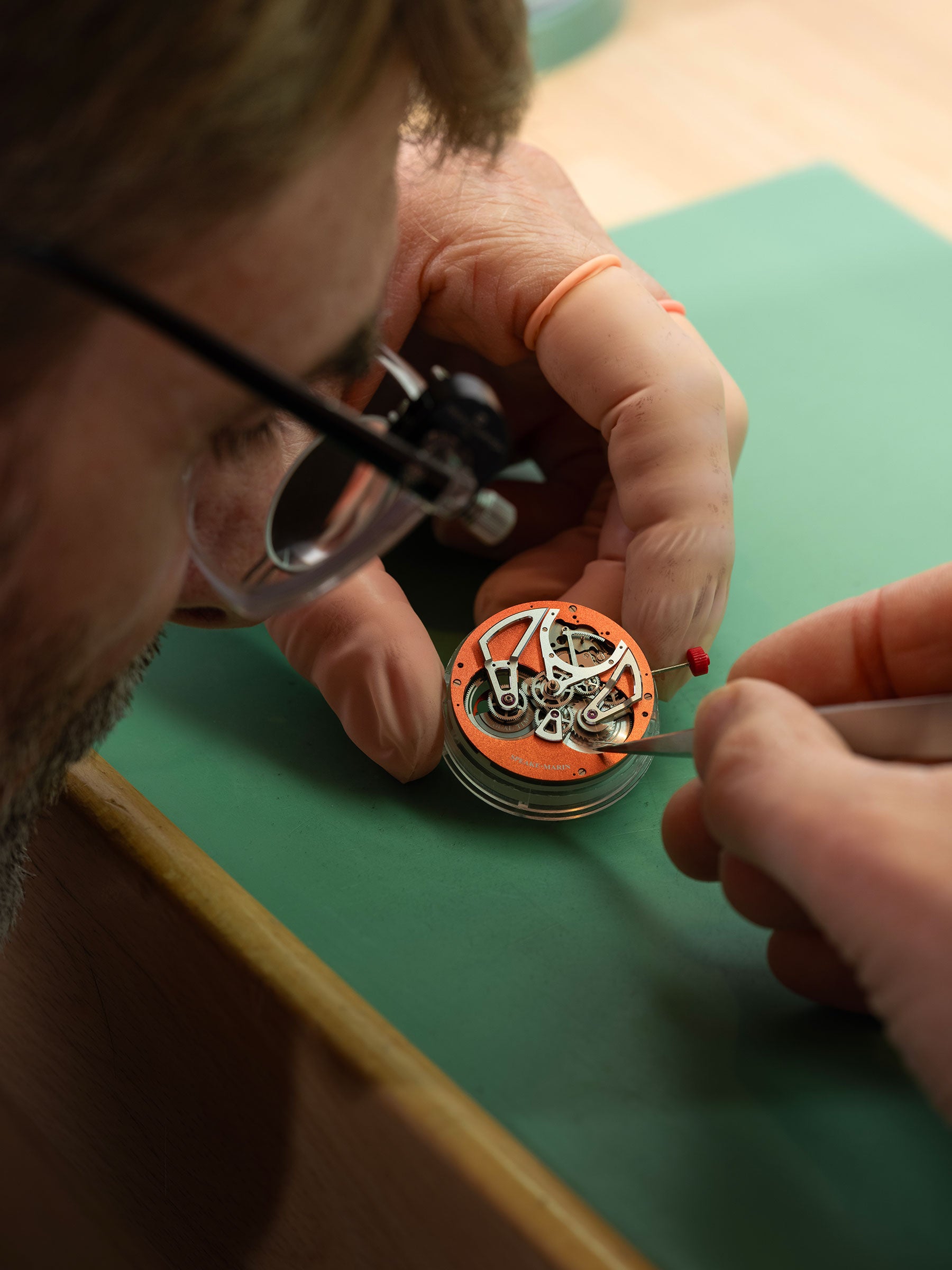
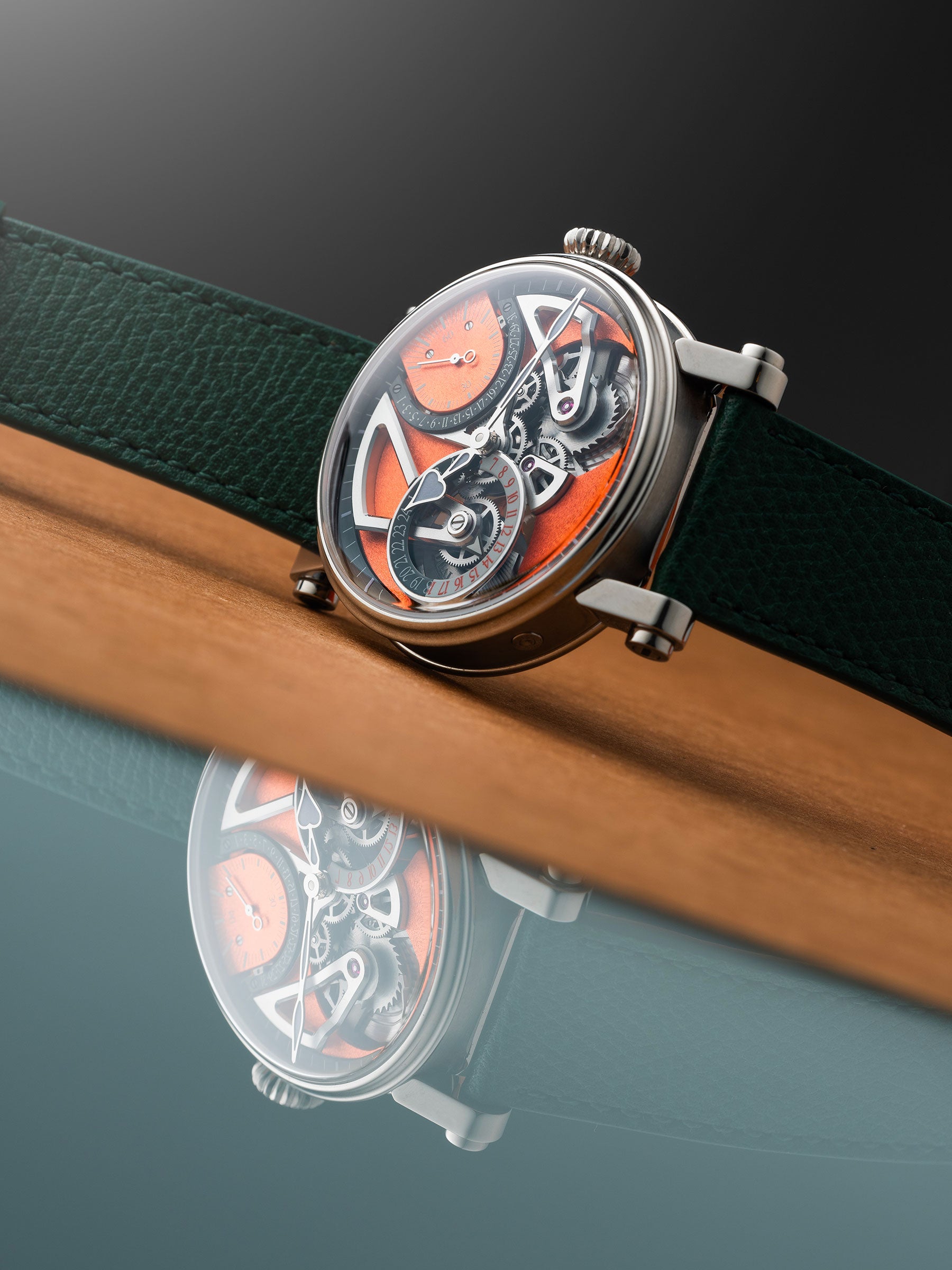
Today, Nicolas oversees the assembly of the most complex timepieces the atelier produces, minute repeaters that take weeks to come alive, perpetual calendars governed by a wheel that completes one full rotation every four years. He brings to each of them what he calls watchmaker's common sense: not a formula, but an intuition earned through years of patient observation. A deep understanding of how invisible forces move through metal, how a problem rarely lives where it appears.
What defines him equally is his belief in transmission. He learned this craft from a retired master who gave him half a day a week for a year and a half, not a lesson, but a conversation between two people who understood that some knowledge cannot survive in manuals. Nicolas carries that debt forward. In his workshop, experience is not protected. It is offered, deliberately, before time runs out.
A watch, for Nicolas Larcher, is never just a mechanism. It is a piece of a life compressed into something small enough to wear on a wrist, and felt by the person who wears it.